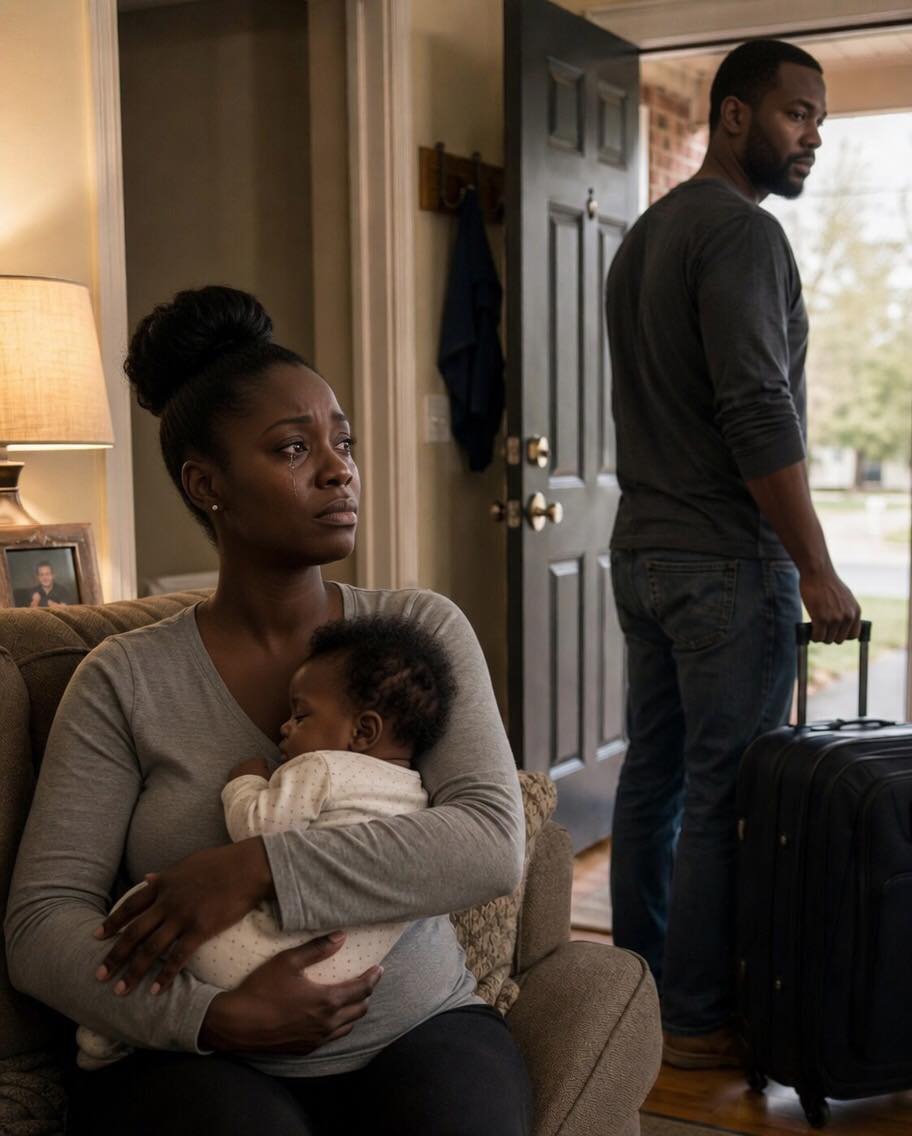
He shook his head.
“If someone wants to know me, they can show up.”
You felt something in your chest loosen after fifteen years.
That night, after Mateo went to sleep, you sat alone in the living room.
The apartment was quiet.
Not lonely.
Quiet.
Your phone buzzed.
A message from an unknown number.
Lucía, I know I failed. I want to talk. Please.
Andrés.
You stared at the message.
Once, that sentence would have torn you open. You would have imagined apologies, explanations, closure. You would have wondered if some part of the man you married still existed under the selfishness.
But now you only felt tired.
Not angry.
Not tempted.
Just tired of men arriving late and calling it effort.
You typed one sentence.
Talk to your conscience first.
Then you blocked the number.
A few weeks later, Valeria contacted you.
You almost didn’t respond.
But her message was careful, respectful, and clearly difficult to write.
I owe you an apology. I believed many things Andrés told me. I was young, but that does not erase the pain I helped cause. I am leaving him. I hope your son knows his words helped me protect my daughter from growing up with the same emptiness.
You read it twice.
Then you sat with the strange weight of it.
For years, you had imagined Valeria as the girl who stole your husband. But the truth was uglier and more complicated. Andrés had not been stolen. He had walked willingly. And the girl had eventually become another woman carrying the cost of believing him.
You replied:
Protect your daughter. That is what matters now.
She answered:
I will.
You never became friends.
Life is not that neat.
But you stopped hating her.
That surprised you most.
Healing did not make you soft.
It made you selective.
You no longer carried people who chose not to carry their own shame.
Mateo entered the academy that fall.
The first day, you woke early to make breakfast even though he insisted he could eat cereal. You ironed his shirt. He complained. You took photos. He complained again, but smiled in every one.
At the gate, he hugged you longer than usual.
“You okay?” he asked.
You laughed.
“You are asking me?”
“Yes.”
You looked at the school behind him, then at the boy in front of you.
“I’m okay.”
He studied your face.
“You promise?”
“I promise.”
He nodded.
Then he walked through the gate.
Not away from you.
Forward.
There is a difference.
Years continued to move.
Mateo became the kind of student teachers remembered. Not because he was perfect, but because he listened deeply, questioned bravely, and treated people with a gentleness that made you secretly proud every time someone mentioned it.
Andrés tried twice more to contact him.
Mateo ignored both attempts.
On his eighteenth birthday, a letter arrived from Andrés with a long apology and a photo of him holding Mateo as a baby.
Except he had never held Mateo as a baby.
The photo was fake.
Poorly edited from an old hospital picture.
Mateo looked at it for a long time.
Then he laughed.
Not because it was funny.
Because it was pathetic.
“He still wants proof without doing the work,” he said.
You watched him tear the letter in half.
Then quarters.
Then smaller pieces.
He threw them away and washed his hands.
That was the moment you knew your son was truly free.
Not because he hated his father.
Because he no longer needed him to become anything.
At graduation, years later, Mateo gave another speech.
This time, you knew in advance.
He had learned mercy, and you had learned not to edit his truth.
He stood at the podium taller, older, his voice deeper now. You sat in the front row again, wearing the same cream blouse because he asked you to. This time, you did not cry before he began.
You made it almost thirty seconds.
He spoke about beginnings that look late to other people. About women who are told their time has passed. About children born into broken homes who still grow whole.
Then he looked at you.
“My mother was told she became a mother too late,” he said. “But she arrived exactly on time for my life.”
That was when you cried.
Completely.
Without shame.
Because fifteen years earlier, Andrés had looked at your newborn son and called him “nice.”
Three months later, he had walked out searching for youth, freedom, and a life without responsibility.
But here was the child he abandoned, standing beneath bright lights, carrying your name, your sacrifices, your stubborn love, and his own brilliant future.
Andrés had wanted to start over.
You had stayed and built something that did not need him.
After the graduation, Mateo found you in the crowd and placed his diploma in your hands.
“This is yours too,” he said.
You shook your head.
“No, my love. It’s yours.”
He smiled.
“Then hold it for me for a minute.”
So you did.
You held the diploma the way you had once held him in the hospital.
Carefully.
Amazed.
Aware that miracles do not always arrive gently.
Sometimes they arrive after years of loneliness, unpaid bills, and broken promises.
Sometimes they arrive in the arms of a forty-one-year-old woman everyone said was too late.
And sometimes, fifteen years later, they stand on a stage and destroy a selfish man’s pride with one sentence.
Not because they seek revenge.
But because truth, when finally spoken by someone who survived it, does not need to shout.
