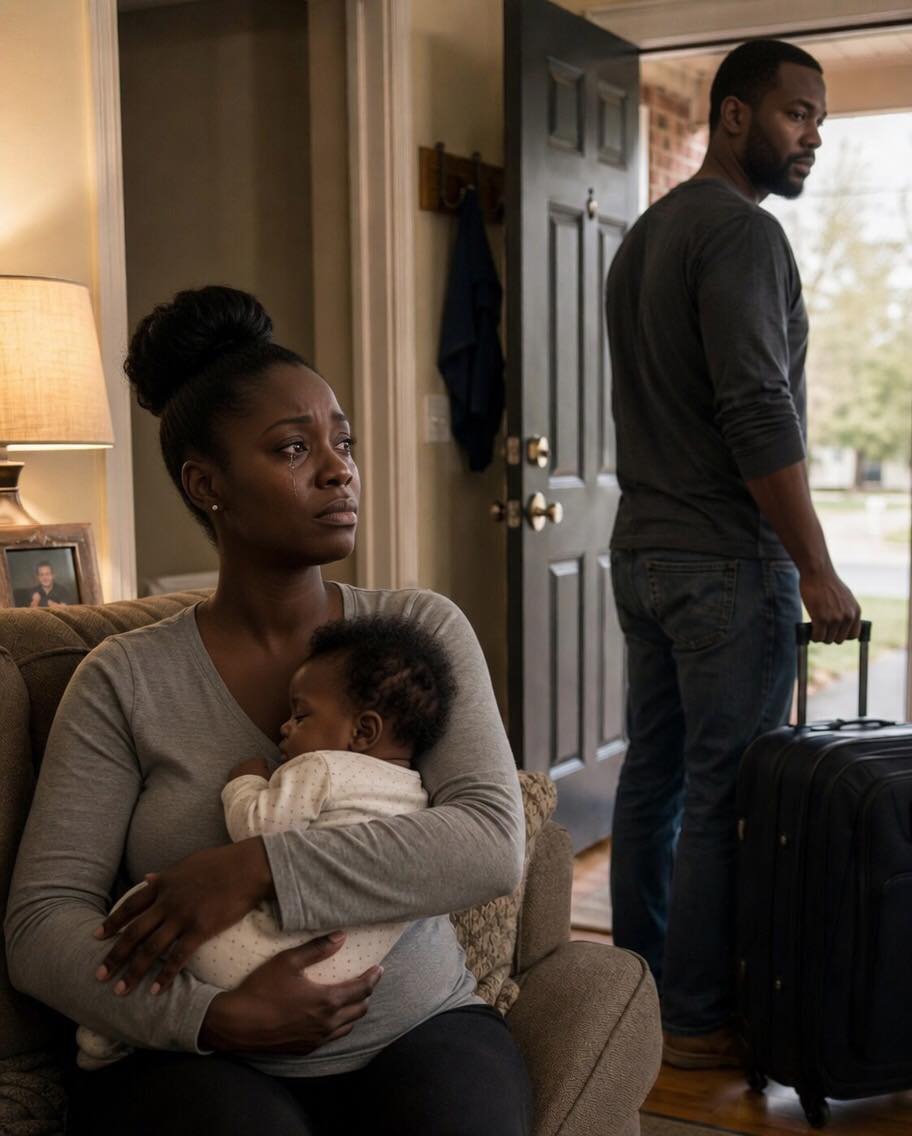
He hugged you so tightly you could feel him shaking.
For one perfect moment, there was no Andrés, no abandonment, no bills, no years of fear.
There was only the boy you had carried at forty-one becoming something even bigger than hope.
The ceremony was held in a grand auditorium with polished wood floors and banners hanging from the ceiling. Families arrived dressed beautifully, holding flowers, cameras, and pride. You wore the cream blouse Mateo loved because he said it made you look “like a president who reads poetry.”
You laughed when he said that.
But you wore it.
Mateo looked handsome in his dark suit. Taller than you now. Serious, nervous, trying not to show it. You adjusted his tie before entering the auditorium.
“You’re choking me,” he said.
“I’m fixing you.”
“I’m already fixed.”
“No child is fully fixed before a ceremony.”
He smiled.
That smile made every sacrifice worth it.
Then you saw Andrés.
He stood near the entrance, wearing a tailored suit and the same expensive cologne he had worn the day Mateo was born. His hair was grayer now, his face fuller, but his posture still carried that old arrogance.
Beside him stood Valeria.
No longer eighteen.
Now thirty-three, polished and tense, holding the hand of a little girl around six years old. Andrés’ daughter, you guessed. The child looked bored and sweet and innocent of all adult sins.
Your stomach tightened.
Mateo saw him too.
His face did not change.
That scared you.
Andrés approached with a smile too wide to be honest.
“Lucía,” he said, as if you were old friends meeting at a reunion.
You nodded once.
“Andrés.”
His eyes shifted to Mateo.
For one second, something like surprise crossed his face.
Maybe he had expected the baby he abandoned to remain small forever. Maybe seeing Mateo tall, composed, and brilliant made the years he missed stand up between them like witnesses.
“Son,” Andrés said, opening his arms slightly.
Mateo did not move.
“Hello, Andrés.”
Not Dad.
Not Father.
Andrés’ smile stiffened.
Valeria looked uncomfortable.
The little girl stared at Mateo with open curiosity.
“I wouldn’t miss this,” Andrés said.
Mateo tilted his head.
“But you did.”
The words were soft.
No anger.
That made them sharper.
Andrés cleared his throat.
“I know I wasn’t always around.”
Mateo looked at him.
“You were never around.”
People nearby began glancing over.
You touched Mateo’s arm gently.
Not to silence him.
Just to remind him he was not alone.
Andrés lowered his voice.
“Today isn’t the time for bitterness.”
Mateo’s eyes hardened.
“You’re right. Today is about work.”
Andrés smiled again, trying to recover.
“Exactly. And I’m proud of you.”
Mateo held his gaze.
“You don’t know me well enough to be proud of me.”
That was the first crack.
Andrés’ face flushed.
Valeria looked down.
The little girl squeezed her mother’s hand.
You almost felt sorry for her. Almost.
An usher called families into the auditorium, and the moment ended before it could explode. Andrés walked in behind you, clearly determined to behave like a father in public now that there were witnesses.
You took your seat near the front because Mateo had reserved it for you.
One seat.
Only one.
Andrés noticed.
He leaned down and whispered, “Where should I sit?”
Mateo looked at the rows behind you.
“Where guests sit.”
Andrés blinked.
“But I’m your father.”
Mateo’s expression remained calm.
“My mother is my parent.”
The second crack.
Andrés walked away stiffly.
You sat down with your heart pounding so hard you could barely hear the music beginning. Mateo went backstage with the other admitted students, leaving you alone in the front row with fifteen years sitting beside you like a ghost.
You remembered the hospital.
The late arrival.
The word “bonito.”
The maleta by the door.
“I’ll send money.”
You remembered the nights Mateo had fever and you had no one to call. The school forms where you wrote your name twice because father information was optional. The birthdays where Mateo pretended not to watch the door.
And now Andrés had come to clap.
How generous.
The ceremony began.
One by one, students walked across the stage as their names were announced. Each received a folder, a pin, and applause from families who had carried them there in visible and invisible ways.
Then the director stepped to the microphone.
“This year, one applicant stood out not only for academic excellence, but for a personal essay that moved the entire admissions committee.”
Your breath stopped.
Mateo had not told you this.
The director smiled.
“We have asked him to read a short excerpt today. Please welcome Mateo Herrera.”
Herrera.
Your last name.
Not Andrés’ surname.
A murmur moved through the room.
You heard it.
Andrés heard it too.
Mateo walked onto the stage.
Tall. Calm. Your son.
He unfolded a paper with steady hands, but you knew him. You saw the tiny movement in his jaw that meant he was nervous.
He looked out at the audience.
Then his eyes found you.
Not Andrés.
You.
And he began.
“When I was asked to write about the person who most shaped my life, people expected me to choose a famous author, a teacher, or maybe a historical figure. I chose my mother.”
Your hand flew to your mouth.
Mateo continued.
“She had me at forty-one, when people told her she was too old to begin. Then, when I was three months old, my father decided he was too young to stay.”
The auditorium went silent.
You felt Andrés shift somewhere behind you.
Mateo’s voice did not shake.
“My mother never taught me to hate him. That was important. She told me the truth, but she never made my heart carry her anger. She worked when she was tired, smiled when she was scared, and gave me a home where absence was not allowed to become shame.”
You could no longer hold back tears.
He looked down at the paper, then back up.
“For years, I wondered if I was missing half of myself because one parent left. But eventually, I understood something. A person who leaves does not take half of you with them. They only reveal which half was never theirs to claim.”
Somewhere behind you, someone whispered.
Mateo paused.
