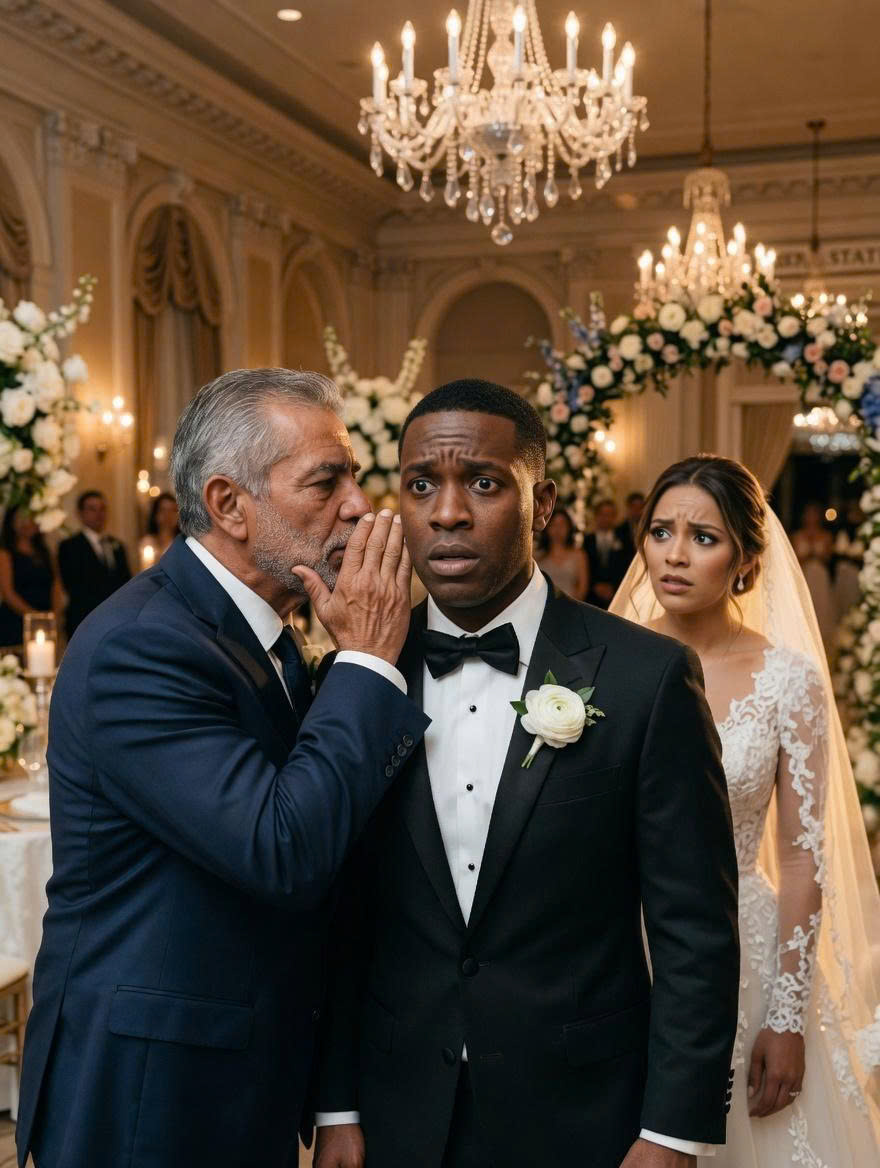
Before the wedding, my future father-in-law whispered to me, “Leave my daughter alone before it’s too late.”
Julián Salazar was thirty-four years old and there were only twenty minutes left before he would walk down the aisle, in front of two hundred people, to marry the woman he believed was the love of his life.
He had paid for that absurd yet perfect wedding himself, a celebration costing nearly eight hundred thousand pesos at an elegant hacienda outside Querétaro. Three days earlier, at her insistence, he had added her name to the deed of an investment apartment in Polanco. He had convinced himself that this was a sign of trust, of a shared future, of mature love. After all, he wasn’t just any naive soul. He was a man who had built his life from the ground up.
The only child of a nurse from Monterrey, Julián grew up watching his mother mend uniforms and stretch money until it seemed like a miracle. While other children played soccer in the street, he drew buildings on napkins, dreaming of luminous spaces, open plazas, libraries where no one felt small. He entered the Tec de Monterrey on a scholarship, worked tirelessly for years, and through sheer discipline became one of the most respected architects in Mexico City. He inherited neither a surname, nor fortune, nor connections. He built everything with his own hands, with sleepless nights and patience.
That’s why, that morning, when she looked at herself in the mirror wearing the dark gray suit that fit her perfectly, she felt that it was finally her turn to be happy.
Then there was a knock at the door.
He wasn’t the event coordinator, nor was he one of her friends. He was Don Ernesto de la Vega, Adriana’s father.
He entered with slow steps, as if his bones were heavy. His face was pale, his hands trembled, and his expression was broken, unlike that of the elegant and haughty man Julián had known for three years. He poured a glass of water, drank it slowly, and avoided looking him in the eye.
“Is everything alright, Don Ernesto?” Julian asked, feeling a chilling premonition.
The man swallowed. Then he murmured, almost voicelessly:
—Stay away from my daughter before it’s too late.
Julian blinked, unable to process it.
-That?
“I shouldn’t have come… but I couldn’t stay silent,” he whispered. “Forgive me.”
And he left the room before Julian could stop him.
The silence that followed was thick. Outside, music played, laughter could be heard, footsteps, directions given, glasses clinked. But inside that room, something had changed. And Julián, who had spent his entire life calculating columns, loads, cracks, and risks, felt several loose pieces suddenly fall into place: the insistence on the deeds, the expenses he had covered, certain comments from his partner Daniela, small contradictions from Adriana that he had chosen to ignore.
Even so, he made a decision that even he didn’t fully understand.
She got married.
She walked down the aisle with an almost supernatural serenity. She smiled for the cameras. She said “I do” in a firm voice. Adriana arrived dressed in white, beautiful, impeccable, with that sweet smile that had won him over at a charity gala three years earlier. Anyone would have sworn it was a perfect story. Only Daniela, sitting among the guests, noticed that something dark and precise had ignited in Julián’s eyes.
The party unfolded like a rehearsed choreography. Julián toasted, hugged, danced, expressed his gratitude, and posed with her family. He was the ideal groom. Adriana relaxed, confident that everything was going as planned.
That same night, back in the hotel suite, she fell asleep quickly, exhausted from the champagne, the dress, and the excitement. Julián remained motionless, listening to her breathing. Then, with a coldness he hadn’t known he possessed, he took Adriana’s phone from the nightstand.
He didn’t have to look too far.
The messages with a man named Mauricio Rivas weren’t hidden. They didn’t need to be. Adriana never imagined Julián would check anything. He started reading.
At first he thought he was misinterpreting. Then, no.
Mauricio wasn’t an ex-boyfriend or a close friend. He was her real, constant, patient partner. The messages were over a year old. They talked about Julián as if he were a project. As if he were an investment.
“He’s perfect,” Adriana had written months before. “Hardworking, disciplined, successful… and so used to solving everything on his own that he doesn’t even notice what’s going on around him.”
Further down, another sentence left him breathless:
“First the marriage. Then we’ll take out the loan for my parents. After that, we’ll figure out how to divide the assets. Patience. He’s a sure thing.”
Julián continued reading, his hand steady and his heart breaking. There were references to the apartment, to family debts, to a shell company registered by Adriana and Mauricio even before she had “met him by chance” at that gala. Everything had been planned. The clinking of glasses on his suit that night. The invitation for coffee. The “spontaneous” encounters. The tenderness. The tears. The wedding plans.
All.
